
About Us
Ambulance Inc Laurel CO
Since 1977, Ambulance Inc. of Laurel County has stood as a lifeline in moments that matter most. Built on a foundation of faith, family, and fearless service, we’ve grown from humble beginnings into a trusted name in emergency medical care—delivering hope, help, and healing to every corner of our community.
OUR STORY
Ambulance Inc. of Laurel County began in January of 1977 after the funeral homes decided they...
OUR STAFF
Looking for a rewarding career in service to your community and its citizens? Look no further...
OUR FOUNDER
Whether it's assistance with training classes, testing or just to reach out with questions or comments...
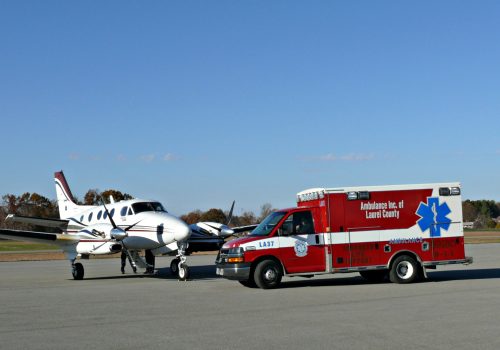
Our story (1977-present)
Putting You First. always.
For over 40 years, we have maintained a community centered and patient focused company that will always put you first. From our first day of operation, we have provided the best training to the best team members out there. Our promise is to continue the legacy of putting you first. Always.


Our Beginning (1977)
Ambulance Incorporated of Laurel County began in January of 1977 after the funeral homes decided they no longer wanted to operate ambulances.
We began with 3 ambulances and a staff often being made up of husbands and wives. During the first year of operation, they responded to around 800 emergency and non-emergency calls. In 2016, we exceeded 11,000 emergency and non-emergency calls.

Paramedics & Advanced Life Support (1980s)
In 1986, we took our patient care one step further. At that time, we began staffing paramedics, providing advanced life support to the citizens of London and Laurel County. We were the first service south of Richmond, Kentucky and north of Jellico, Tennessee to provide this type of service. One of our goals is to have each unit staffed by a paramedic, providing every patient with advanced life support.
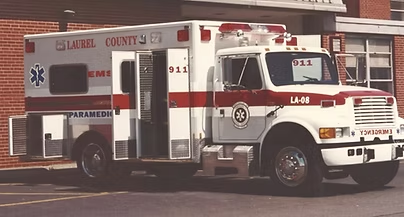

Growing Pains & Groundbreaking Tech (1990s)
The 1990s marked a period of rapid growth in emergency medical standards across the county. Many ambulance services began adopting GPS technology and dispatch systems to improve response times. Community awareness programs were launched to promote EMT skills, and paramedics began receiving more advanced trauma and cardiac care training.
In 1990, Ambulance Inc. established a Hazardous Incident Team, equipping personnel to respond to hazardous situations in Laurel and surrounding counties. Several team members achieved certification for search and rescue, and K-9 units were introduced to assist with search and cadaver recovery.
It was a decade of professionalization and technical upgrades for EMS nationwide.
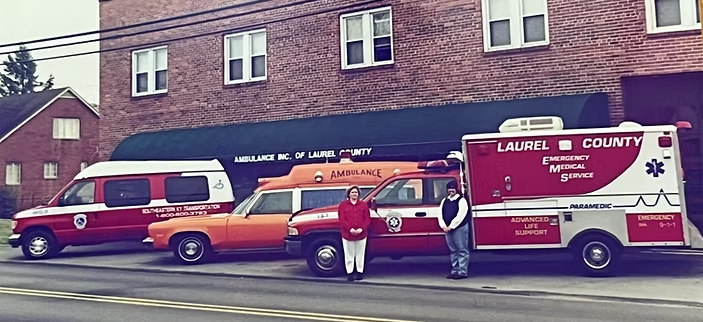
Going Digital & Raising Standards (2000s)
By the 2000s, digital innovation changed the game. Electronic patient care reporting (ePCR) became more common, replacing handwritten run sheets. Defibrillators became smaller and were widely deployed, including in public spaces. Ambulance services also began adapting to national standards like HIPAA, updating their protocols to handle patient data securely while maintaining rapid care delivery.
In 2008, Ambulance Inc. became a Registered National Registry Exam Site, offering NREMT Skills Exams for paramedics and AEMTs. Students from across the nation traveled to Laurel County to complete their certification at this location.

Community First & Ready for Anything (2010s)
The 2010s brought a new emphasis on integration with hospitals, data-driven performance, and community-based care. EMS teams began participating in opioid response strategies and mental health transports. Mobile technologies helped teams stay connected in real time, while training shifted toward simulation-based learning for critical scenarios. Many services also prioritized disaster readiness and multi-agency coordination.
In 2012, Ambulance Inc. of Laurel County was recognized for excellence, receiving the “Service of the Year” award from the Kentucky Ambulance Providers Association. The award was presented in Lexington, Kentucky, by Randolph Mantooth, the lead actor from the iconic “Emergency!” TV series.
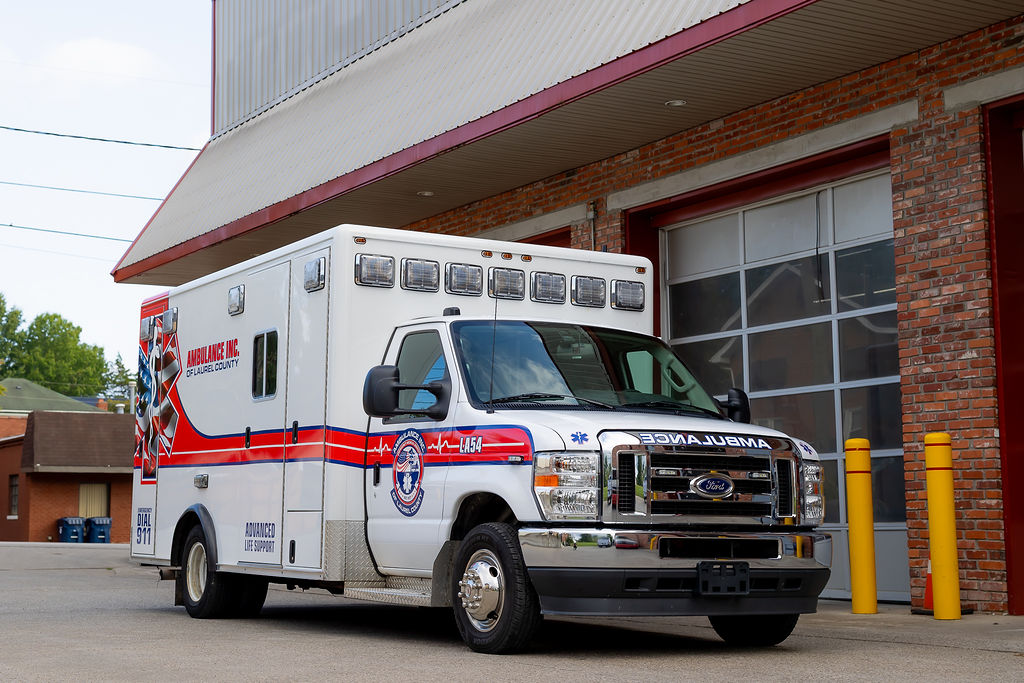
Innovation on Every Route (2020-Current)
Today’s ambulance services are faster, smarter, and more connected than ever. With advanced telemedicine integration, some units can consult doctors live from the field. AI is being used to help prioritize calls, drones assist in search and rescue, and electric ambulances are beginning to hit the roads. EMS continues to evolve, focused on both patient care and community well-being in a high-tech, high-demand world.